Developed and managed by tanjabulatovic.com
info@chizora.com

.png)
Research shows that beauty ideals vary dramatically across societies (Abdoli et al., 2024). In some regions, lighter skin is idealized, while in others, tanned skin is the goal. Some cultures celebrate curves while others value slimness. This isn't just a matter of preference these standards are deeply embedded in societal expectations and can significantly impact mental health and self-esteem (Dubey, 2025).
Your idea about moving to a different country resonates with real psychological research. When someone relocates, they encounter an entirely different set of cultural beauty norms. The features that once felt confident and normal may no longer align with local standards. This contextual shift can create genuine internal conflict not because a person has changed, but because the definition of beauty around them has.
Research on body image among different cultural groups reveals this clearly: women from varied backgrounds experience and respond differently to beauty standards based on their cultural contexts (Dubey, 2025). When that context shifts, so does the psychological pressure.
Where your argument becomes even more critical is with social media. Digital platforms compress beauty into a narrow, global ideal that doesn't reflect actual cultural diversity (Bharti, 2026). Girls everywhere are exposed to the same filtered, edited images regardless of their local cultural context. This creates a disconnect: they're being judged against an artificial standard that has nothing to do with their own culture's values.
The research is clear that this contributes to body dissatisfaction, low self-esteem, anxiety, and depression (Bharti, 2026).
Your insight about understanding beauty as contextual rather than universal is transformative. It shifts the narrative from "something is wrong with me" to "I'm navigating different cultural expectations." That distinction matters enormously for mental health and self-acceptance.
The notion that beauty follows a single, unchanging standard is a modern myth perpetuated by globalized media. In reality, beauty ideals vary dramatically across the world shaped by history, economics, geography, values, and social structures (Abdoli et al., 2024). A girl growing up in Nigeria, for instance, encounters fundamentally different beauty messaging than a girl in South Korea or Brazil. When she moves to a new country, she doesn't just change her zip code; she enters an entirely different system of beauty norms (Kohler & Mill, 2025).
Research has consistently shown that culture profoundly influences body image perceptions (Dubey, 2025). The "beauty premium" the documented advantage that attractive people receive in social and economic outcomes does appear to exist globally, but what counts as "beautiful" shifts dramatically depending on cultural context (Kohler & Mill, 2025). This finding has profound implications for understanding why someone might feel beautiful in one location and inadequate in another, not because they changed, but because the standard changed.
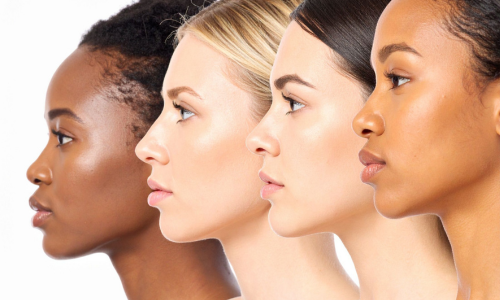
One of the most significant yet underexamined aspects of beauty standards is colorism discrimination based on skin tone which operates globally but manifests differently across regions (Dixon & Telles, 2017). Western societies, where colorism is closely intertwined with racism, have a long history of privileging lighter skin among people of color. However, colorism extends far beyond the Western world and operates according to distinct cultural logics in different regions (Dixon & Telles, 2017).
In South Asia, including Pakistan and India, lighter skin has historically been idealized, with a multibillion-dollar skin-lightening industry testifying to the persistence of these standards (Dixon & Telles, 2017). A qualitative study conducted in Azad Jammu & Kashmir, Pakistan, revealed the complexity of how young women navigate beauty standards in their cultural context (Bint-e-Khalil & Ali, 2025). While approximately half of participants defined beauty primarily in terms of physical appearance, the remainder emphasized internal traits such as personality and behavior. Notably, nearly 45% of respondents believed that beauty is objective rather than subjective, reflecting the powerful influence of external social and cultural standards (Bint-e-Khalil & Ali, 2025).
In Africa, colorism operates within distinct systems. Research examining K-Pop beauty standards in South Korea revealed how fair skin, slim bodies, small faces, sharp noses, and double eyelids serve as a form of invisible racism, functioning as a mechanism of social exclusion (Panjaitan et al., 2026). The social impact includes increased social pressure, acceptance of body stigma, and reinforcement of racial prejudice that affects how people view themselves and form social relationships.
The intersectional nature of colorism deserves particular attention. Among Black American women specifically, colorism is gendered it affects women more severely than men and intersects with other systems of oppression to create distinct psychological burdens (Lemi & Brown, 2020). Skin tone discrimination shapes not only beauty ideals but also employment opportunities, romantic partner selection, and psychological well-being across populations (Han, 2020).
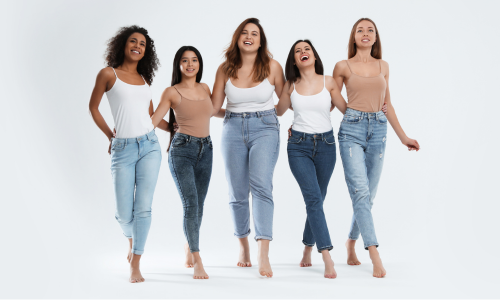
Beauty standards in Latin America reflect a unique blend of indigenous heritage, African ancestry, and European colonialism. Research comparing body image among Brazilian and Portuguese women with children revealed significant cross-cultural differences in how women perceive and experience body distortion (Patrão et al., 2022). The findings showed that most women in both cohorts had accurate perceptions of their own body size, but when distortion did occur, different factors were at play. Brazilian women were more likely to perceive themselves as heavier if they had experienced cancer, while Portuguese women with less education were less likely to perceive themselves as heavier. The study highlighted how cultural, socioeconomic, and health-related factors uniquely shape body image in different national contexts.
A validation study of the Spanish Body Image States Scale in Colombia revealed that body satisfaction was significantly associated with BMI and current dieting status among young adults (Chams et al., 2019). Female participants reported lower body satisfaction than male participants, consistent with gender patterns observed globally. However, the strength and nature of these relationships suggests that Latin American contexts have their own distinct beauty pressures beyond simple thinness.
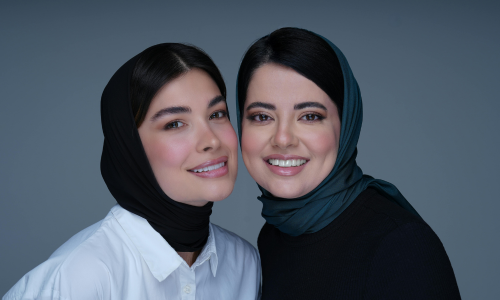
The relationship between Western acculturation and body dissatisfaction in non-Western societies has emerged as an important area of research. A comparative study examining body dissatisfaction in Saudi Arabia and Turkey found that body mass index, but not cultural orientation per se, was associated with body dissatisfaction (Melisse et al., 2025). Interestingly, participants who had lived in a Western country for at least six months reported higher body dissatisfaction scores than those who had not, suggesting that direct exposure to Western cultural contexts may intensify body concerns even when living in non-Western environments (Melisse et al., 2025).
Research conducted in Saudi Arabia found that 71.2% of female participants were classified as having negative body image, with social media addiction and higher BMI being significant risk factors (AlQahtani et al., 2025). This finding is particularly striking given that traditionally, fuller body sizes have been valued in Middle Eastern cultures, suggesting that global media exposure may be shifting these standards.
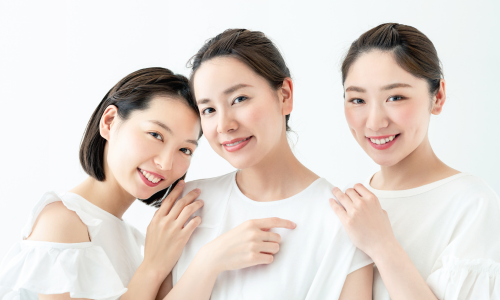
The comparison between Chinese and American body image perceptions reveals fascinating cultural differences. A cross-cultural study on body-size perception among first-generation Chinese migrants living in Italy found that Chinese participants had lower BMI discrepancy scores than Italian participants, suggesting different preferences for body size (Castellini et al., 2022). After multivariate analysis, being of Italian ethnicity was independently associated with higher desire for thinness, while age showed varied impacts across groups. These findings suggest that genetic predisposition, migration experience, and cultural context all interact in shaping body image preferences.
Research examining acculturation effects among Asian Americans, particularly those exposed to cultural priming, found that self-esteem played a crucial protective role against media internalization (Kim, 2023). The study revealed that while cultural priming (exposure to Asian cultural cues) was not statistically significant in reducing media internalization, self-esteem emerged as a distinct factor significantly negatively associated with internalization of mainstream beauty standards (Kim, 2023).
A phenomenological study exploring sociocultural construction of beauty among young women in Pakistan revealed deeply embedded tensions between individual experience and cultural expectations (Bint-e-Khalil & Ali, 2025). The research identified how media representations play a central role in reinforcing narrow, idealized, and often unattainable beauty standards, creating a system in which women are disproportionately subject to stringent aesthetic scrutiny (Bint-e-Khalil & Ali, 2025). The study found that beauty ideals in Pakistani society are shaped by multiple sociocultural patterns regarding how female bodies should be maintained, displayed, and evaluated.
Vietnamese American young adults experience complex negotiations of beauty standards that intersect with racism and cultural identity. A qualitative study found that all participants encountered some form of gendered racism, and approximately two-thirds internalized orientalist portrayals of Asian Americans, developing insecurities about their Asian physical traits (Dang & Han, 2025). The research highlighted how internalized racism directly affects body image dissatisfaction and can lead to body modification behaviors as coping mechanisms.
A scoping review examining figure rating scales used in sub-Saharan Africa for body image assessment found significant variation in which scales have been applied across the region (Hurston et al., 2025). Notably, 39% of the 23 different figure rating scales used in African studies were developed in the USA or Australia, 35% in Europe, and only 26% were developed in Africa itself. This discrepancy raises important questions about whose beauty standards are being measured in research on African body image.
The research on Kosovo specifically offers insights into how beauty standards function within a particular European cultural context. A study with 350 women and girls in Kosovo found that 55.5% agreed that beauty plays a role in a woman or girl's success in life (Halimi & Kamberi, 2024). Approximately 60% believed that beautiful women and girls find it much easier to get hired, and about 70% stated that beauty affects self-esteem in both women and girls. These findings underscore the universal recognition that beauty standards carry real consequences for women's opportunities and psychological well-being across diverse cultures.
One of the most compelling pieces of evidence for the cultural nature of beauty standards comes from migration research. When individuals move to new countries, they often experience shifts in how they perceive their own attractiveness and body image changes that cannot be explained by physical transformation alone (Mesoudi et al., 2016).
A landmark study examining how people become "WEIRD" (Western, Educated, Industrialized, Rich, and Democratic) through migration revealed that individualism, which is typical of Western societies, is driven primarily by horizontal cultural transmission (e.g., via mass media), while collectivism and other non-Western traits are driven by a mix of vertical/oblique (family) and horizontal transmission (Mesoudi et al., 2016). This finding suggests that when individuals migrate, they may rapidly absorb Western beauty ideals through media exposure while retaining family-influenced values more slowly.
Post-migration stressors among international migrants include not just physical relocation but also psychological challenges related to body image and racial identity. A study of Kenyan female migrants in Austria found that racism and Black body objectification significantly affected mental health, contributing to alienation, separation, and isolation (Stuhlhofer, 2021). These findings highlight how beauty standards are inseparable from broader systems of racial discrimination and how migration exposes individuals to new forms of racialization and body-based judgment.
Research examining Americanized beauty standards among participants from the US and South Korea revealed significant predictors of perceived attractiveness (Bissell & Chung, 2009). The study found differences in how participants evaluated others' attractiveness, with several predictors—including BMI, self-discrepancy, and attitudes significantly linked to attractiveness ratings. The cross-cultural comparison highlighted that cultural context shapes not only what people find attractive but also how they evaluate attractiveness in others.
While beauty standards have always varied across cultures, modern social media has created unprecedented pressure toward a single, narrowly defined global beauty ideal (Bharti, 2026). This global standard predominantly reflects Western, Eurocentric norms typically featuring light skin, thinness, youthfulness, and highly Westernized facial features (Bharti, 2026).
Research examining AI-generated images revealed striking biases in how "default" humans are represented (Ghosh & Caliskan, 2023). When asked to generate images of "a person" without specific demographic information, Stable Diffusion most closely generated images of men and least frequently generated images of non-binary individuals, and showed a strong preference for people from Europe and North America over Africa and Asia. The platform also showed unexpected patterns of oversexualization of women from Latin America, Mexico, India, and Egypt demonstrating how even AI systems perpetuate and amplify Western fetishization of women of color.
The digital beauty influencer economy has reproduced colorism at scale. Research examining how Black beauty influencers are perceived by Black women viewers found that beauty influencers with darker skin tones were rated as significantly less attractive and less competent than influencers with lighter brown and medium brown skin tones (Love et al., 2025). Participants were also less likely to click on videos of darker-skinned beauty influencers, a disparity that has real consequences for influencer marketability and visibility (Love et al., 2025).
The expansion of eating disorders and body dissatisfaction into non-Western countries tracks closely with Western media exposure and the spread of thinness ideals (Dane & Bhatia, 2023). What was once considered a "culture-bound" syndrome primarily affecting North America and Europe is now documented globally, particularly in regions with increasing social media penetration (Stern, 2018). This suggests not that eating disorders are somehow "naturally" emerging, but rather that Western beauty standards are being actively transmitted and absorbed through global media channels.
Recent research has attempted to move beyond simple descriptions of different beauty standards to understand whether the "beauty premium" the economic and social advantage of being perceived as beautiful operates universally or varies culturally (Kohler & Mill, 2025). This breakthrough study created a linguistic measure of the beauty premium by examining how beauty-related words appear in machine learning-based language models across 68 languages (Kohler & Mill, 2025).
The findings suggest that the beauty premium may be universal, with considerable heterogeneity across cultures (Kohler & Mill, 2025). This is a crucial distinction: while being beautiful appears to confer advantages everywhere, what counts as beautiful, and how large those advantages are, varies significantly. A person who is considered beautiful in one culture may find themselves penalized in another not because they've changed, but because the standard has.
Research comparing body image among young women and men across different countries consistently finds that gender shapes beauty standard pressures differently across cultures, though gender inequalities appear remarkably consistent (Kågesten et al., 2016). Young adolescents in different cultural settings commonly endorse norms that perpetuate gender inequalities, with parents and peers being especially central in shaping such attitudes (Kågesten et al., 2016).
Among female football players from Poland, Turkey, and India, the study found that nearly half were at risk of orthorexia nervosa (an obsessive focus on healthy eating), with the highest prevalence among Indian athletes (Staśkiewicz-Bartecka et al., 2024). Statistically significant relationships were observed between the risk of orthorexia and factors such as age, dietary exclusions, social media usage, and sources of nutritional information. The study highlighted that while socio-cultural pressures and media use are contributing factors, psychological factors and individual behaviors appear equally significant across cultural contexts (Staśkiewicz-Bartecka et al., 2024).
Research conducted in India examining the effects of age and gender on dietary patterns, body image, and confidence found significant age-based differences (Jacob & Panwar, 2023). Snacking and convenience food consumption, social dependence, and height dissatisfaction all showed significant age differences. This suggests that beauty standards and body image concerns evolve across the lifespan, with different ages experiencing different pressures and vulnerabilities.
A nuanced review examining the evolutionary view of body image perception across cultures, comparing China and the US, explored the debate between evolutionary adaptations and cultural evolution byproducts (Liu et al., 2025). While evolutionary psychology suggests that certain beauty cues such as waist-to-hip ratio and facial symmetry should be universal markers of attractiveness, cultural evolution theory emphasizes how these preferences are modified through cultural transmission and social learning (Liu et al., 2025).
The research revealed that while some universal cues may exist, they are heavily modulated by cultural context. Historical shifts in beauty preferences within single countries (such as the valorization of thinness in the US over the past century) demonstrate that even within genetically stable populations, beauty ideals transform dramatically due to cultural factors (Liu et al., 2025).
Cross-cultural research employing standardized measures like the Sociocultural Attitudes Towards Appearance Questionnaire has demonstrated that internalization of beauty ideals is a significant predictor of body concerns across diverse populations (Yokusoglu, 2024). However, the research also revealed important cultural variations: in Turkish society, paternal dieting status influenced daughters' shape and weight concerns more strongly than in Western countries, a finding that had not been previously reported in international literature (Yokusoglu, 2024).
Despite the homogenizing pressure of global media, regional beauty standards persist and, in some cases, are being reasserted as sites of cultural pride and resistance (Brown et al., 2025). A study examining how women of color on TikTok engage with viral trends found that they strategically use social media to construct subaltern digital commons, celebrating ethnic pride while fostering solidarity across diaspora communities (Brown et al., 2025). These creators promote cross-cultural engagement while resisting Eurocentric beauty standards, demonstrating that digital platforms can serve as sites for both cultural homogenization and cultural assertion.
Research on the impact of body-positive social media content found that while such content improves body satisfaction and emotional well-being in the short term, its long-term efficacy remains uncertain (Jiménez-García et al., 2025). The meta-analysis revealed that body-positive content shows the most promise when it emphasizes diverse body representations and self-acceptance, and when exposure is consistent and ongoing. However, the variability in study results underscores that no single approach works uniformly across all populations, highlighting the importance of culturally tailored interventions (Jiménez-García et al., 2025).
The research is unequivocal: beauty standards are profoundly cultural, not universal. A girl moving from Nigeria to Norway, or from Korea to Canada, does not simply maintain her sense of beauty; she encounters an entirely different system of meaning around what makes someone attractive, worthy, and valuable. The features that once made her feel confident may suddenly feel inadequate not because she changed, but because the standard changed.
This understanding has several crucial implications:
First, it validates the emotional and psychological experiences of people who migrate or live across cultures (Dubey, 2025). The dissonance they feel is not pathological; it's a logical response to changing beauty norms.
Second, it reveals how social media, despite connecting people globally, has created new forms of inequality by promoting a narrow, Westernized beauty ideal while marginalizing the diverse beauty standards that have existed across human cultures for millennia.
Third, it suggests that efforts to promote positive body image and mental health must be culturally responsive and cannot assume that research from Western contexts applies universally (Jiménez-García et al., 2025).
Finally, it demonstrates that beauty seemingly the most personal and individual of judgments is deeply social, cultural, and political. Understanding beauty standards means understanding power: whose standards get promoted, who benefits, and who is marginalized by particular definitions of attractiveness.
The evidence presented across this review demonstrates conclusively that beauty is not universal it is contextual, cultural, and constantly shifting. When girls move between countries or cultures, they are not failing to maintain their attractiveness; they are simply encountering different rules in a different game. The task ahead is to help young people everywhere understand that their beauty is not wrong because it doesn't match a global ideal. Rather, they have the opportunity to recognize that beauty has always been multiple, diverse, and locally rooted and that understanding can be profoundly liberating.